What is a computer network?
A computer network refers to
computing devices that are connected to each other and can exchange data and
share resources with each other. These network devices use a system of rules,
known as a communications protocol, to transmit information via physical or
wireless technology.
How does a computer network
work?
Nodes and links are the basic
building blocks in computer networks. A network node can be data communications
equipment (DCE) such as a modem, hub or switch, or data terminal equipment
(DTE) such as two or more computers and a printer. A link is a delivery medium
that connects two nodes. Links can be physical, such as cables fiber optics,
or free space used by wireless networks.
In a working computer network,
nodes will follow a set of rules or protocols that determine how to send and
receive electronic data over the link. Computer network architecture determines
the design of these physical and logical components. Computer network
architecture provides specifications for the network's physical components,
functional organization, protocols, and procedures.
What is the use of a computer
network?
Computer networks were first
created in the late 1950s for use in the military and defense departments.
Initially, computer networks were used to transmit data over telephone lines
and had limited scientific and commercial applications. With the presence of
internet technology, computer networks have become something that corporations
really need.
Modern networking solutions
provide more than just connectivity. Network solutions have become critical to
digital transformation and business success today. Underlying network
capabilities have become more programmable, automated, and secure.
Modern computer networks are
capable of:
Operate virtually
The underlying physical
network infrastructure can be logically partitioned to create multiple
“overlay” networks. In an overlay computer network, nodes are linked virtually,
and data can be transmitted to each other over multiple physical paths. For
example, many corporate networks are overlaid on the internet.
Integrate at scale
Modern network services
connect physically distributed computer networks. This service can optimize
network functions through automation and monitoring to create large-scale
networks with high performance. Network services can be scaled up or down based
on demand.
Respond quickly to changing
conditions
Many computer networks work
determined by software. Traffic can be routed and controlled centrally using
digital interfaces. This computer network supports virtual traffic management.
Provide data security
All network solutions come
with built-in security features such as encryption and access control.
Third-party solutions such as antivirus software, firewalls, and antimalware
can be integrated to make the network more secure.
What are the types of computer
network architecture?
Computer network designs are
classified according to two general categories:
1. Client-server architecture
In this type of computer
network, nodes can be servers or clients. Server nodes provide resources such
as memory, processing power, or data to client nodes. Server nodes can also
manage client node behavior. Clients can communicate with each other, but
cannot share resources. For example, some computer devices on a corporate
network store data and configuration settings. This device is a server in the
network. Clients can access this data by making requests to the server machine.
2. Peer-to-peer architecture
In a peer-to-peer (P2P)
architecture, connected computers have equal standing and privileges. There is
no central server to coordinate. Each device in a computer network can act as
either a client or server. Each peer can share some of its resources, such as
memory and processing power, with the entire computer network. For example,
some companies use P2P architecture to host memory-hungry applications, such as
3-D graphics rendering, across multiple digital devices.
What is network topology?
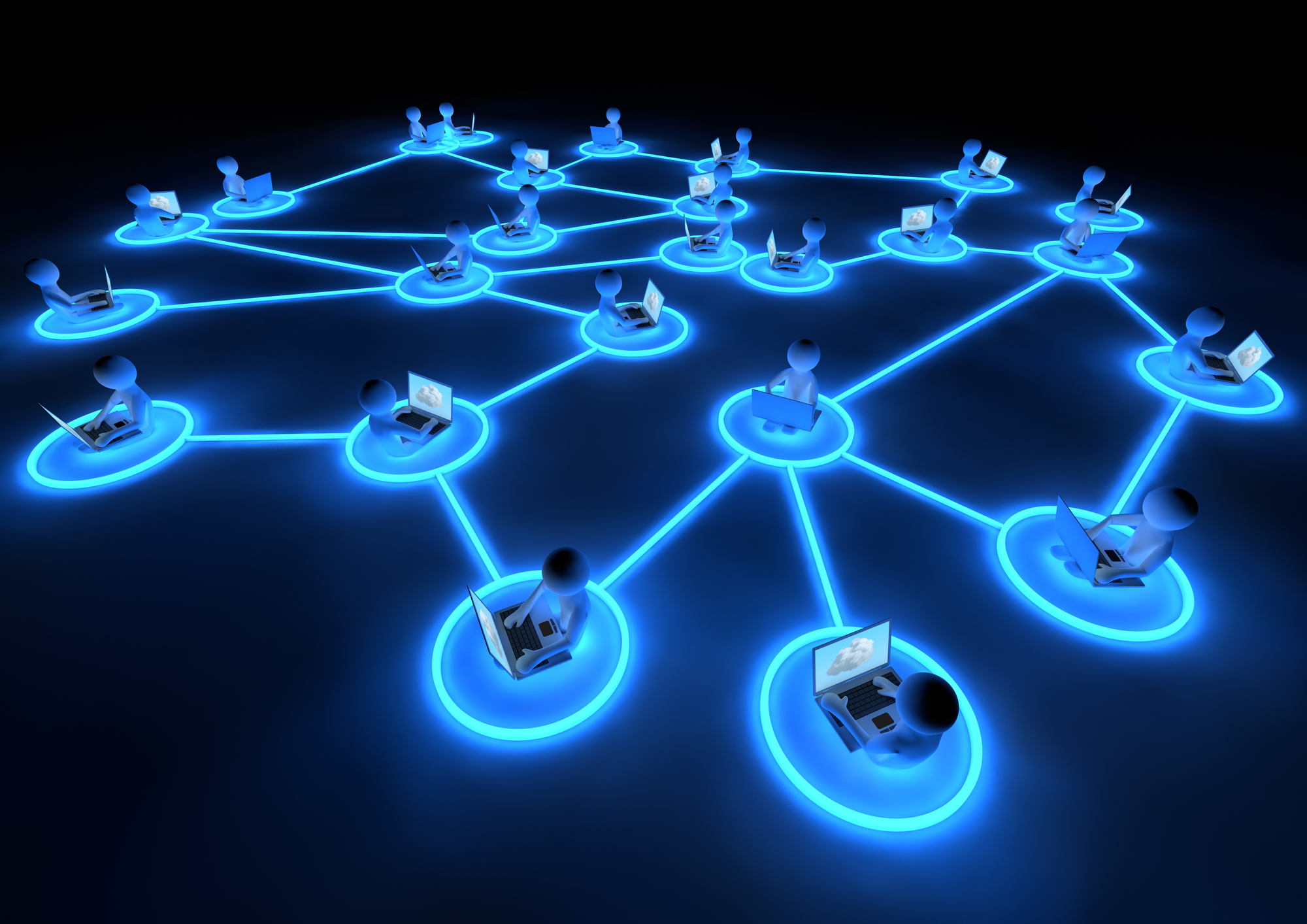
The arrangement of nodes and
links is referred to as network topology. Nodes can be configured in various
ways to achieve different results. Several types of network topology include:
Bus topology
Each node is linked to only
one other node. Data transmission in a network connection occurs in one
direction.
Ring topology (ring)
Each node is linked to two
other nodes, thus forming a ring. Data can flow in both directions. However, a
single node failure can bring down the entire network.
Star topology
The central server node is
linked to multiple client network devices. This topology has better performance
because data does not flow through each node. This topology is also more
reliable.
Mesh topology
Each node is connected to many
other nodes. In a full mesh topology, each node is connected to all other nodes
in the network.
What are the types of
corporate computer networks?
Based on the size and needs of
the organization, there are three general types of corporate private networks:
Local area network (LAN)
LAN is an interconnected
system, which is limited in size and geography. In general, a LAN connects
computers and devices in one office or building. These networks are used by
small companies or test networks for small-scale prototyping.
Wide area network (WAN)
Corporate networks that span
buildings, cities, and even countries are referred to as wide area networks
(WANs). Local area networks are used to transmit data at higher speeds over
short distances, while WANs are used for secure and reliable long-distance
communications.
SD-WAN or software-defined WAN
is a WAN architecture controlled by software technology. SD-WAN offers more
flexible and reliable connectivity services, which can be controlled at the
application level without compromising security and quality of service.
Service provider network
Service provider networks
allow customers to lease network capacity and functionality from providers.
Network service providers may include telecommunications companies, data
operators, wireless communications providers, internet service providers, and cable
television operators that offer high-speed internet access.
Cloud network
Conceptually, a cloud network
is similar to a WAN whose infrastructure is provided with cloud-based services.
Some or all of an organization's network capabilities and resources are hosted
in a public or private cloud platform and provisioned on demand. These network
resources can include virtual routers, firewalls, bandwidth, and network
management software along with other required tools and functions.
Today, businesses use cloud
networks to accelerate time to market (TTM), increase scale, and manage costs
effectively. The cloud networking model has become the standard approach to
building and delivering applications for the modern corporation.
Post a Comment